
OnlyFans refund decisions follow fixed rules, not customer-service instinct. Most fans assume a refund works like a retail return, where dissatisfaction is enough to get money back. The platform does not operate that way. Refund eligibility is decided by transaction type, delivery evidence, and timing, which is why two similar complaints can produce opposite outcomes. BestOnlyFans tracks these patterns because refund rules shape how fans actually spend on the platform.
This article traces the real decision paths behind refund requests. It separates transactions that carry refund rights from those that never do, explains what support teams look for, and shows how to structure a request that survives the first review. BestOnlyFans refreshes its rankings every month.
Transactions That Carry Refund Rights
OnlyFans refunds exist for a narrow set of transaction failures, not for changed minds. The platform treats a subscription as a completed purchase once content access begins. That single rule eliminates most satisfaction-based claims before they reach a human reviewer. The BestOnlyFans method stays consistent across updates.

Four categories carry genuine refund rights: failed content delivery, duplicate charges, unauthorized transactions, and specific documented technical errors. Each requires proof tied to the transaction itself, not to how the fan feels about the content afterward.
- Failed content delivery: paid content never unlocked, messages that will not open, or media files that return errors on every device.
- Duplicate charges: the same transaction billed twice within a short window, usually from a double-tap confirm or a page refresh mid-payment.
- Unauthorized transactions: charges made after account compromise, with no purchase history matching the fan’s normal pattern.
- Documented technical errors: payment completed but the platform logged no corresponding entitlement, confirmed through transaction records.
A slow-loading video is not a delivery failure. A creator whose posting style changed is not a delivery failure. Those complaints are common, and support closes them without refund because the purchased access technically worked.
The Content Delivery Failure Pathway
Delivery failure claims get the closest review because they are the most abused category. Support needs to verify that the issue sits with the platform or the content, not with the fan’s connection, device, or expectations.
The threshold is reproducibility. If a locked message stays locked after a purchase, that is verifiable. If a PPV unlock charged the fan but the media never appeared in the message thread, that is verifiable. If a video plays on one device but not another, support usually classifies it as a local issue.
- Transaction identifier from the payment confirmation email or billing history page.
- Exact timestamp of the failed attempt, including time zone if the fan can determine it.
- Screenshots showing the error state, the locked content, or the missing entitlement.
- Device and browser details, plus whether a second device produced the same result.
- A short written sequence of what was purchased and what failed to appear afterward.
Requests that include all five elements move through review faster. Requests that describe frustration without timestamps or identifiers are almost always closed as unsupported.
Tip: before requesting a refund for undelivered content, log out and back in, then retry on a different device. If the content appears, the claim will be rejected, and the retry saves the review time.
Timing Windows and Billing Cycle Edges
Timing decides more refund cases than any other factor. A subscription charge is evaluated against the billing cycle, the renewal state, and when the fan noticed the problem.
Mid-cycle cancellations do not generate refunds. When a fan cancels, access continues until the paid period ends, and the charge stands. The same logic applies when a creator raises the price: auto-renew stops, but existing access lasts until the current period expires.
- Promotional first month: discounted entry pricing, sometimes as low as $3 for the first month, still follows standard no-refund rules once access starts.
- Auto-renewal charge: refundable only if the fan can show the renewal was unauthorized or the reminder was missed due to a platform error.
- Same-day duplicate: strongest refund position, since the second charge is clearly unintentional.
- Mid-cycle cancellation: no refund; access runs to the end of the paid period.
- Price increase after renewal: no refund for the current period, but auto-renew must stop, which fans should verify in settings.
- Long-delayed complaint: weak position; requests filed weeks after the charge face a higher evidence bar.
Paid base subscriptions run from $4.99 to $49.99, with most sitting between $4.99 and $15 and averages clustering around $5 to $10. Those amounts are small enough that timing disputes often cost more in effort than the charge itself, which is exactly why the rules stay strict.
Unauthorized Transaction Investigation
Unauthorized transaction claims split into two very different paths. Account compromise is refund-eligible. Authorized use by someone with card access, such as a partner or family member, typically is not.
Support examines purchase history for anomalies. A sudden burst of charges at unusual hours, new payment methods, or logins from unfamiliar locations support a compromise claim. Charges that match the fan’s normal browsing and spending pattern do not.
Fans should secure the account first: change the password and enable two-step authentication before filing. A refund request filed on a still-compromised account usually gets paused until security is restored.

Wallet Credits and Refund Routing
Wallet credits complicate refunds because the money no longer sits with the original card. Support restores credits first in most cases, then routes cash refunds to the payment source when the transaction never delivered anything.
Partial restorations are common. If a fan used a mix of wallet balance and card payment on one unlock, only the card portion returns to the card. Understanding this split prevents confusion when the refunded amount looks smaller than expected.
| Payment Source Used | Refund Destination | Timeline |
|---|---|---|
| Credit or debit card | Original card via processor | 5-10 business days after approval |
| Wallet credits | Wallet balance restored | Usually within 24-48 hours |
| Mixed wallet and card | Split: credits to wallet, cash to card | Wallet fast, card on processor schedule |
| Verification hold | Automatic return of the $0.10 hold | Within a few days, no request needed |
Documentation and Request Structure
A refund request is a technical document, not a complaint letter. Support teams process volume, so requests that present facts in order get resolved faster than emotional appeals.
Every request should lead with the transaction, follow with the failure, and close with the specific outcome wanted. The platform fee structure matters here too: creators keep 80% of what fans pay, and the platform takes 20%, so refunds reverse both sides of that split and require matching adjustments internally.
- Transaction identifier and exact charge amount from billing history.
- Timestamped description of the failure and the steps already tried.
- Attached screenshots or screen recordings showing the error state.
- A clear statement of the requested remedy: full refund, partial refund, or credit restoration.
Fans researching which pages are worth paying for in the first place often use ranking resources such as best only fans top lists to check creator activity before subscribing, which reduces refund situations before they start.
When Chargebacks Become Necessary
Chargebacks are the escalation path when platform review fails or the charge is genuinely fraudulent. They carry real consequences, so the threshold should be high.
Filing a chargeback through the card issuer usually triggers an account restriction while the dispute runs. The platform may suspend purchasing privileges, and in some cases the account itself, until the dispute resolves. Fans should treat this as a last resort after the platform review has produced a documented denial.
| Dispute Type | OnlyFans Response | Account Impact |
|---|---|---|
| Platform refund request | Internal review of transaction and evidence | None; account stays active |
| Card issuer chargeback | Responds to issuer with transaction records | Temporary purchase restrictions possible |
| Fraud claim after compromise | Cooperates if account security was restored | Low impact with documented compromise |
| Repeated disputes | Flags account for review | Risk of permanent restriction |
Documentation transfers to the chargeback case. The same screenshots, timestamps, and transaction identifiers used in the platform request become the evidence packet for the issuer.
Prevention Through Verification Habits
Most refunds are avoidable because most refund disputes start with an unclear purchase. Fans who verify before paying rarely need the refund pathway at all.
- Check recent posting activity and message response patterns before subscribing to a paid page.
- Preview available content and read the page description to confirm what the subscription includes.
- Confirm the displayed price before completing checkout, especially after any promotional period ends.
- Understand what a PPV unlock buys, since PPV messages can run up to $50 and paid chat commonly costs $3 to $5 per message.
- Review billing history monthly to catch duplicate charges or unexpected renewals early.
Free pages set the price to $0 and earn through PPV and tips instead, which changes the refund picture entirely. On free pages, there is no subscription charge to dispute, only individual unlocks and tips. Tips can reach $100 and are generally treated as final.
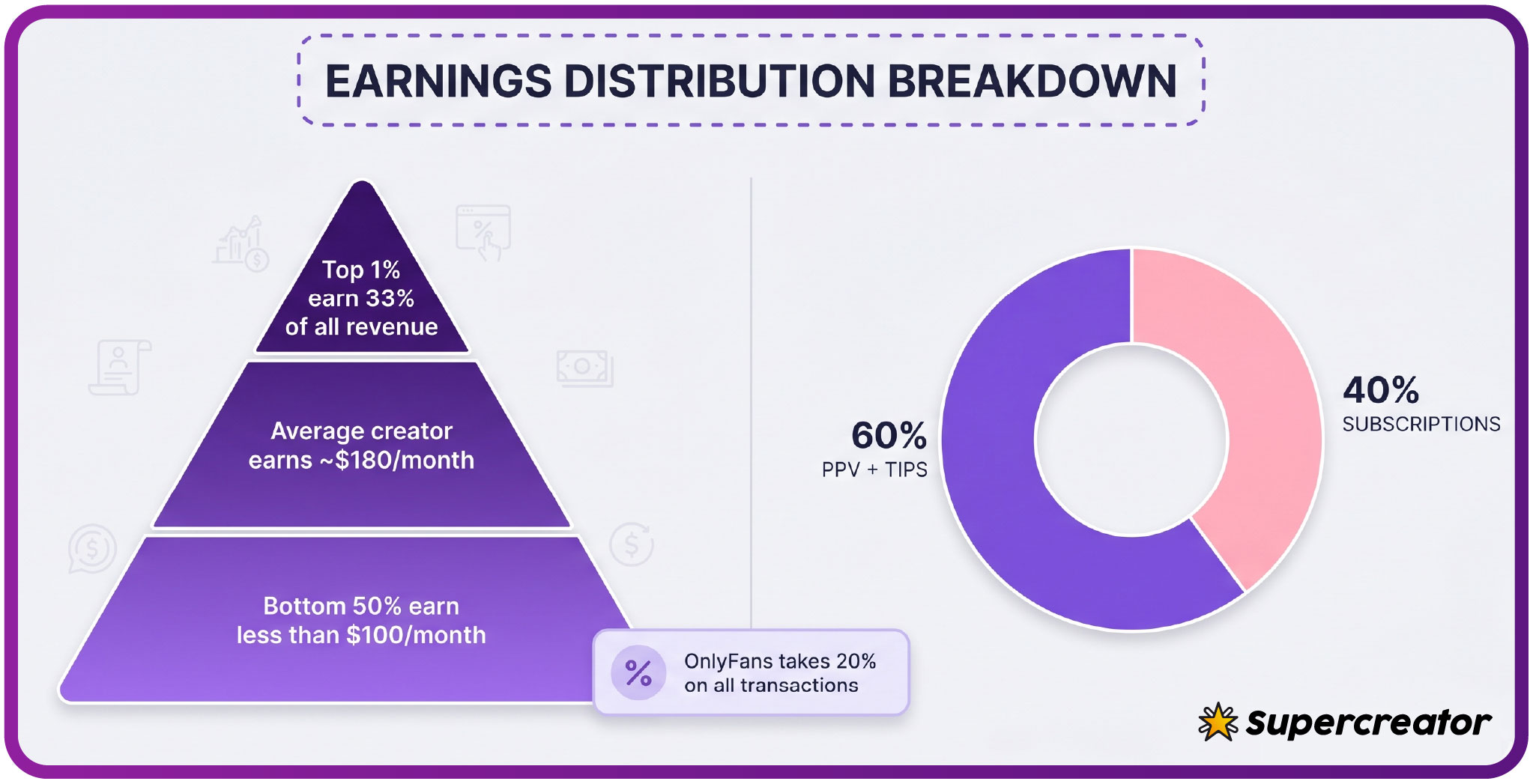
Since the platform has no built-in discovery feed or directory, fans rely on outside research to judge which pages match their expectations. That research step is the cheapest refund prevention available.
FAQ
Can I get a refund if a creator stops posting after I subscribe?
Generally no. A subscription buys access for the paid period, not a guaranteed posting schedule. If the creator stops posting mid-period, access still runs to the end of the term. Refunds in this situation succeed only if a documented technical failure also occurred.
How long does OnlyFans take to process refund requests?
Review times vary with evidence quality. Requests with transaction identifiers, timestamps, and screenshots typically resolve faster. Once approved, wallet credits usually restore within 24 to 48 hours, while card refunds take about 5 to 10 business days through the processor.
What happens to my access if I dispute a charge with my bank?
The account may face temporary purchase restrictions while the dispute runs. Access to already-paid content can also be affected. The platform responds to the issuer with transaction records, and repeated disputes raise the risk of permanent restriction.
Are tips and custom content payments refundable?
Tips are generally treated as final and non-refundable. Custom content payments are refundable only when the delivered content never arrived or failed technically. Dissatisfaction with the finished custom work does not create refund rights, because the transaction completed as agreed.